
Previous Conferences
Day 1
Adaptive by Design: Contextual Reinforcement Learning for Mission-Ready Cyber Defence
Jake Thomas, AdvaiAutonomous Cyber Resilience: An Infrastructure-as-Code Approach for Coalition Military Networks
Dr Konrad Wrona, NATO Communications and Information AgencyDeploying Autonomous Cyber Defence onto a Military Relevant Physical System
Alec Wilson, BMTPanel: Operationalising AI - Integrating Machine Learning into Defence Cybersecurity Systems
Helen, Dstl, with Ministry of Defence stakeholders.Autonomous Defensive Cyber
Wayne & Lara, DstlSimulation-to-Reality Gap via RL-trained ROSbots
Dr Jack Smith, AwerianTopological Extensions for Reinforcement Learning Agents (TERLA).
Tim Dudman, Riskaware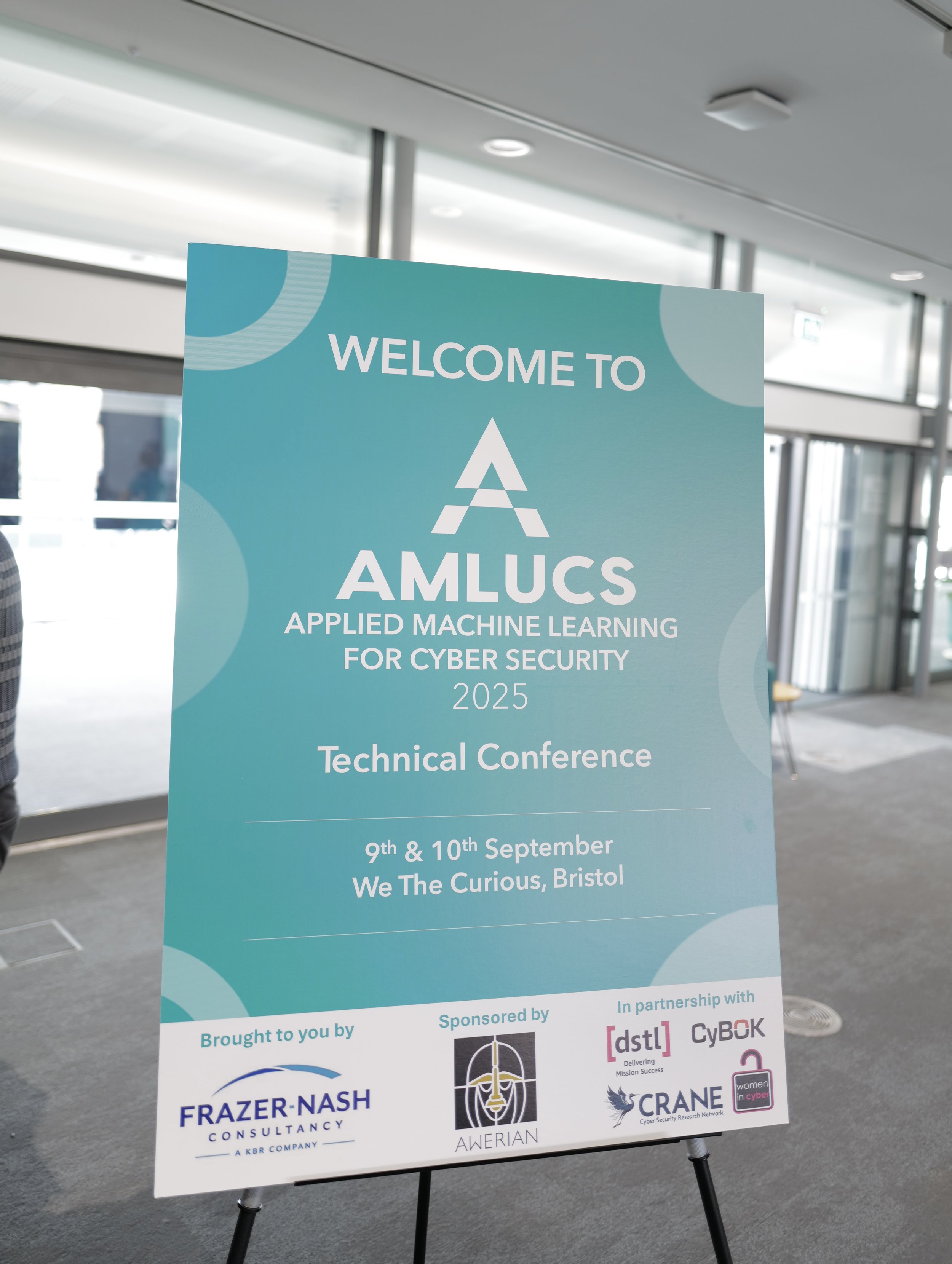
AMLUCS 2025
Sponsored by: Awerian
Day 2
RAGING MINOTAUR: Improving Defence against AI-driven Cyber-Attacks by Designing More Capable Autonomous Cyber Training Adversaries
Althea & Sharaz, DstlLessons Learned in the Application of Reinforcement Learning Agents for APT Attack Path Generation
Chad Caison, Six24 Cyber Labs, SIEGE team, DARPA CASTLEMitigating data poisoning attacks against RL from Human Feedback (RLHF) finetuning
Dr James Titchener, RaytheonText2VLM: Adapting Text-Only Datasets to Evaluate Alignment Training in Visual Language Models
Gabriel Downer, AdvaiA Statistical Pipeline for Uncertainty Quantification in ACD Test and Evaluation
Dr Miriam Apsley & Dr Alessio Zakaria, Smith InstituteModelling adversarial behaviour to enable AI predictions analogous to counterfactual reasoning
Dr Louis Gauntlett, Frazer-Nash ConsultancyDay 1
Reinforcement Learning for AECO
M Owen: S4 Foresight, Frazer‑Nash Consultancy & DstlXAI Model Architectures for Cyber Security
Dr. R Shea: DstlAdaptive Social Learning
T Webb: Smith InstituteIndoor Maritime Models for Attack Identification
M Henzelman: The Alan Turing InstituteMulti‑Objective Reinforcement Learning for Automated Robotic Object Enumeration
E Cunha: Defence Science and Technology LaboratoryAutomating Camera Scenes in Deepfake Detection
N Tyler: Frazer‑Nash Consultancy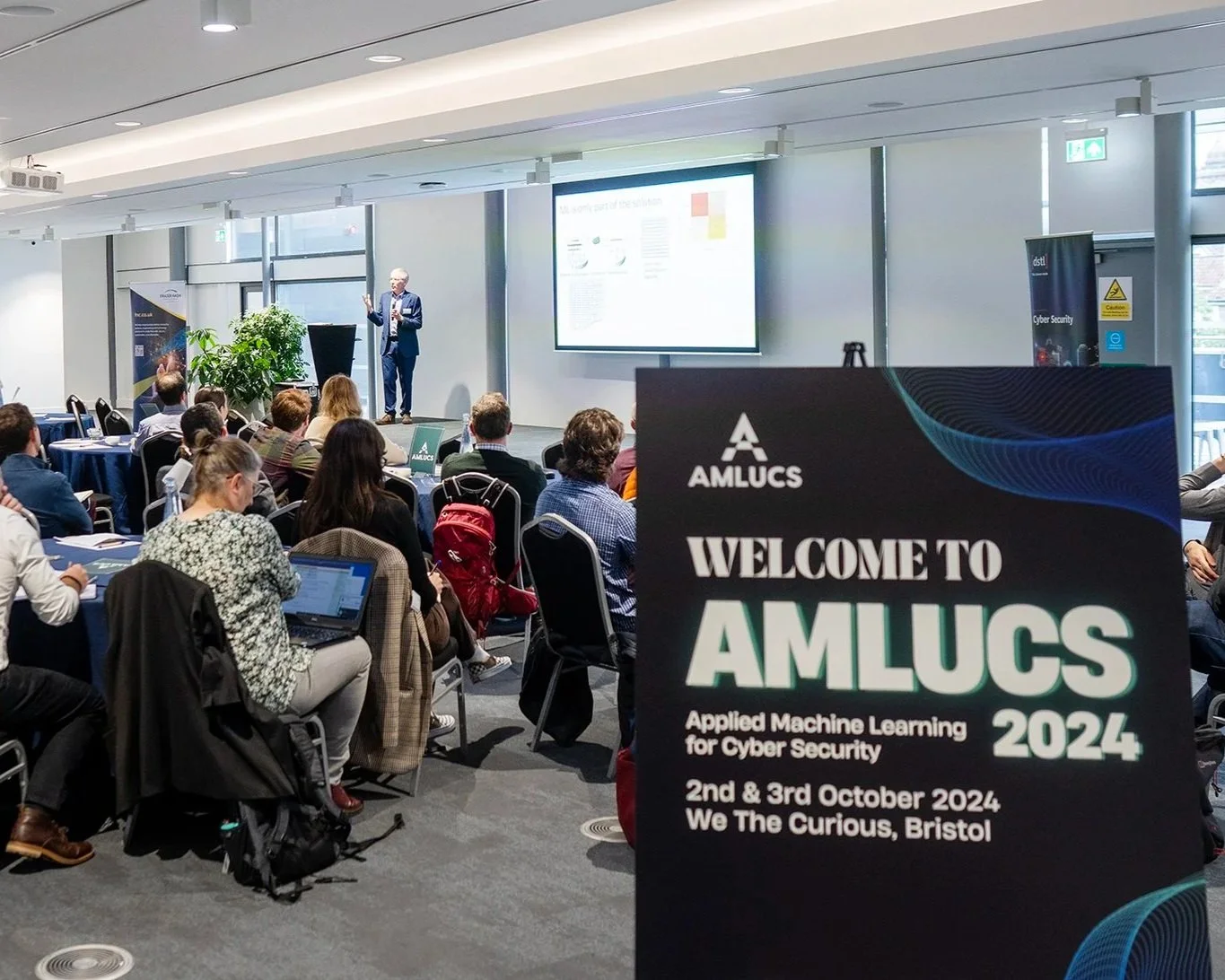
AMLUCS 2024
Partnered by: Frazer Nash Consultancy and Dstl
Day 2
Investigating Cyber Behaviour Agents
R Simpson: Hot HorizonMI:RL for AI‑Active Cyber Defence
Professor S Maskell: Royal Navy, The Alan Turing Institute; Prof. M Herbster: Royal Navy, RaytheonAI/ML Automation Modelling Framework
J Wood: DstlMonitoring OT Cyber Defence using RL
M Allison: Roke Manor Research
AMLUCS 2023
Founded by: Dstl
Cyber Attribution Fingerprinting with Deep Learning
MontvieuxCritical Asset Cyber Terrain Identification (CACTI)
Riskaware Knowledge Graphs for Cybersecurity: Past, Present & Future
GoogleIntelligent Asset Parameterisation for Risk-based Moving Target Defence
University of WarwickDeep Reinforcement Learning and Genetic Algorithms
IllumrCO-DECYBER: Co-operative Decision Making for Cybersecurity
Cambridge ConsultantsExploring Reinforcement Learning algorithms in agents’ performances and resiliency in cybersecurity simulations context
University of LiverpoolAutonomous Resilient Cyber Defence using Multi-Agent Reinforcement Learning for Operational Technology applied to the Maritime Domain
BMT and ADSPAI for Cyber Defence (AICD) and the 3rd Cyber Autonomy Gym for Experimentation (CAGE) challenge
Alan Turing InstituteDevelopment of a Data Efficient Reinforcement Learning Tool for Cyber Security Defence
Decision LabBridging the Sim-to-Real Gap for AI and Machine Learning
QinetiQ and BMTTowards a Risk-Based Framework for the Evaluation of Action-Recommending Systems within Autonomous, Resilient Cyber Defence Capabilities
QinetiQThe challenge of “Responsible AI” in the military for autonomous resilient cyber defence research and application
CapGemini